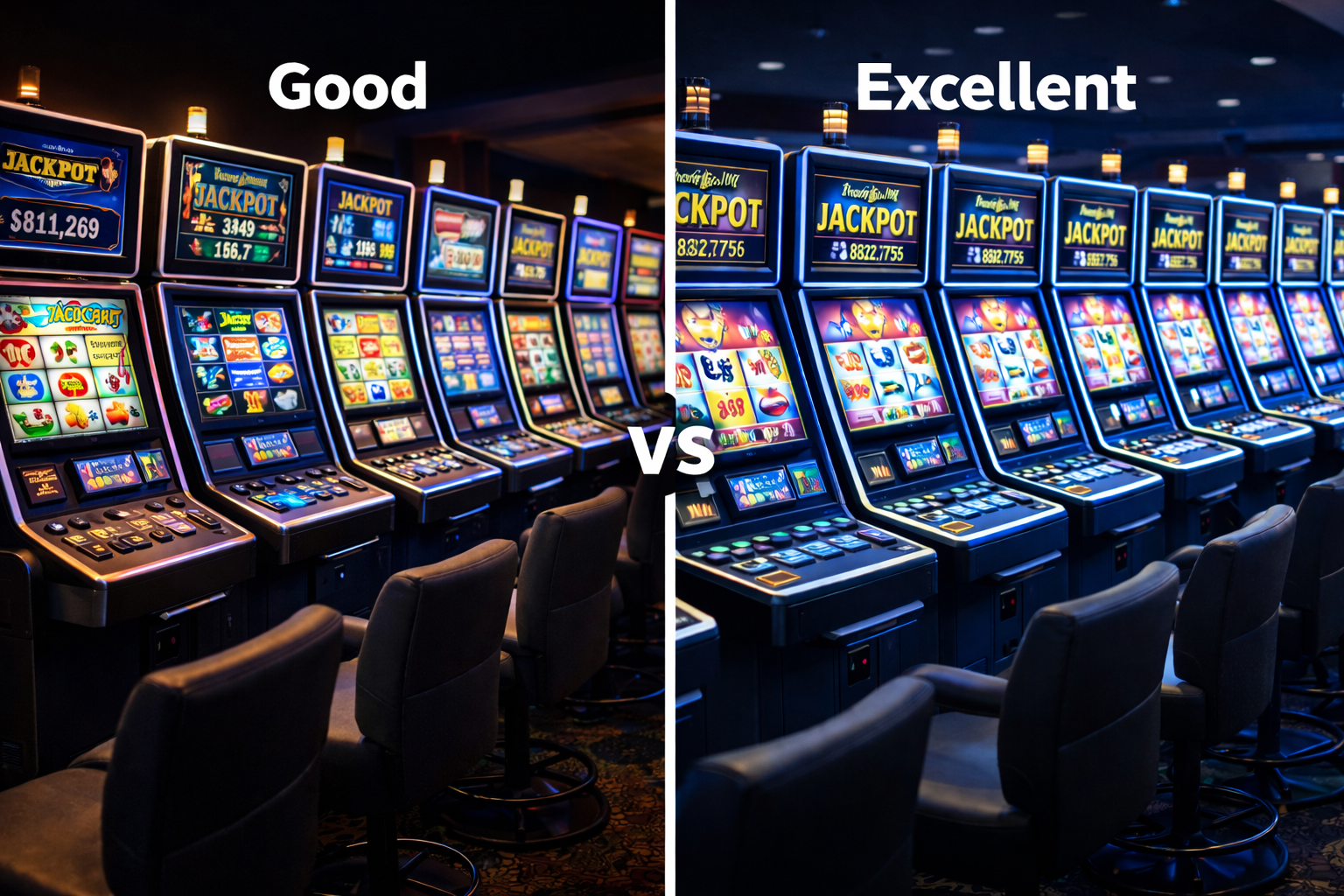
Most casinos that have been operating for a few years settle into a rhythm that feels solid. The numbers are respectable, the staff know what they are doing, the regulators are satisfied, and ownership is not calling every week. From the outside there is little to criticize. The building runs, the payroll is paid, the guests return often enough. If you have spent time in this industry you know how much effort it takes to reach that point. Stability in gaming is not accidental.
Yet from time to time you step into a property that operates at a different level. Not in a dramatic way. The carpet is not necessarily newer, the chandeliers are not brighter, the marketing budget is not obviously larger. But the place feels composed in a way that is difficult to manufacture. Conversations are shorter. Decisions move with less friction. There is less noise around relatively simple matters. You notice it within an hour, sometimes sooner.
Over the years I have tried to understand what separates those operations from the many that are simply good. It is rarely a single initiative. It is not a clever loyalty scheme or a particularly talented marketing director. It has more to do with how the organization behaves under normal conditions.
One of the clearest differences lies in decision latency. In a good casino, decisions are generally correct. They may take a little time, they may pass through a couple of desks, but they eventually land in the right place. In stronger properties, decisions are not only correct but timely. The discussion is focused. People know where authority sits. There is less circular movement of information.
This becomes visible in small operational moments. A proposal to adjust table mix during a seasonal shift is evaluated and tested within weeks, not left to sit because the current numbers are acceptable. A slot relocation that has been debated informally is either implemented or dismissed with reasons, instead of lingering as a recurring agenda item. When performance in a zone weakens, the response is proportionate and direct. The emphasis is not on defending prior choices but on improving current ones.
What makes this possible is not aggressiveness. It is clarity about who is allowed to decide and how much risk the organization is prepared to absorb. Good properties often hesitate not because they lack intelligence but because they are unsure how much deviation from the norm will be tolerated. That hesitation accumulates. It does not cause collapse, but it slows adjustment.
Another shift becomes apparent in how accountability is handled. In many operations there is an unspoken effort to avoid mistakes at almost any cost. Managers protect themselves through escalation. Supervisors double-check decisions that are already within their remit. The intention is responsible, yet the side effect is caution that borders on paralysis.
In casinos that have crossed into a higher level of performance, there is a different understanding. Mistakes are expected within reasonable bounds. A decision made in good faith and within defined authority is reviewed, not punished. That does not mean standards are lower. It means that energy is directed toward correction rather than blame.
I remember taking over a property that was already performing well on paper. Revenue was stable, cost ratios were within target, and there were no visible compliance issues. Yet the middle management layer was visibly tense. Every deviation from routine triggered consultation. Supervisors were technically empowered, but culturally reluctant to act. Once we made it explicit that reasonable judgment would be supported rather than dissected, behaviour changed more quickly than any procedural update could have achieved. The floor did not become reckless; it became more fluid.
Comp discipline offers another lens. In a good casino, reinvestment is monitored and reported. Percentages are discussed in meetings, and deviations are noted. In stronger operations, comp is treated as a controlled instrument rather than a courtesy. Decisions are tied closely to incremental contribution. Longstanding relationships are valued, but they do not override the underlying economics. There is a difference between hospitality and habit.
This is often where internal discomfort surfaces. Hosts and managers develop personal bonds with key players. Saying no, or tightening terms, feels disloyal. In excellent properties, leadership makes it clear that discipline is not a sign of ingratitude but of sustainability. Over time that stance stabilizes margin without damaging relationships, because expectations are consistent.
Reporting culture is another quiet separator. Many properties produce accurate reports yet struggle with interpretation. Variances are explained with context that softens the impact. Underperformance is framed as temporary or externally driven. In operations that have matured further, reporting is less defensive. Weakness is identified plainly. Discussions focus on response rather than justification.
There is a difference between understanding why something happened and excusing it. Senior managers who insist on clarity without theatrics create an environment where problems are surfaced earlier. The tone is not accusatory; it is factual. That tone allows course correction before issues grow large enough to demand intervention.
Cross-department alignment also plays a role, though it is less visible at first glance. In many good casinos, departments coexist effectively. Marketing delivers campaigns, operations runs the floor, finance tracks performance, surveillance monitors compliance. Tension arises occasionally, usually around priorities or cost. In stronger operations, there is a shared understanding of trade-offs. Marketing consults operations before launching something that will affect staffing. Finance understands the operational implications of its controls. Surveillance supports smooth play while maintaining standards.
This alignment does not eliminate disagreement. It shortens it. When conflicts are resolved quickly and without ego, execution improves almost automatically. Time that would otherwise be spent negotiating internal boundaries is spent refining the guest experience.
One aspect that often goes unnoticed is how leadership behaves during periods of stability. It is easier to drive improvement during crisis. External pressure forces action. The more subtle challenge is maintaining intensity when the business is comfortable. Excellent properties have a habit of reviewing assumptions even when there is no immediate threat. They revisit layouts, staffing models, reinvestment strategies, and vendor relationships before performance demands it.
That discipline requires a certain level of discomfort. It means questioning decisions that have been working reasonably well. It means risking short-term disturbance for longer-term sharpening. Not every organization is prepared for that. Stability creates its own inertia.
Over time, the cumulative effect of these differences becomes visible in the numbers, though not always dramatically. The property does not lurch between strong and weak quarters. Adjustments are incremental but steady. Margin is protected not through drastic cuts but through consistent calibration. Staff turnover may not be lower in absolute terms, but knowledge is distributed more evenly. Guests experience fewer delays and fewer inconsistencies.
From the outside, it can be difficult to pinpoint what distinguishes the very good from the merely good. There is no single metric that captures it. It is a combination of decision speed, tolerance for reasonable risk, financial discipline, honest reporting, and alignment across functions.
None of these elements are mysterious. They do not require exceptional charisma or revolutionary technology. They require clarity about standards and the willingness to maintain them even when no one is demanding change.
If you have spent enough time in different properties, the contrast becomes easier to detect. You walk into one building and sense that people are waiting for alignment. You walk into another and sense that alignment is already embedded.
The move from good to excellent is not a leap. It is a series of small structural choices made consistently over time. Most casinos are capable of operating well. Fewer commit to the internal discipline that lifts performance beyond comfort.
And once you have managed both types, you begin to notice the difference almost immediately.